
Collaborative Field Trials Advance Automation in Coral Reef Restoration
August 31, 2026
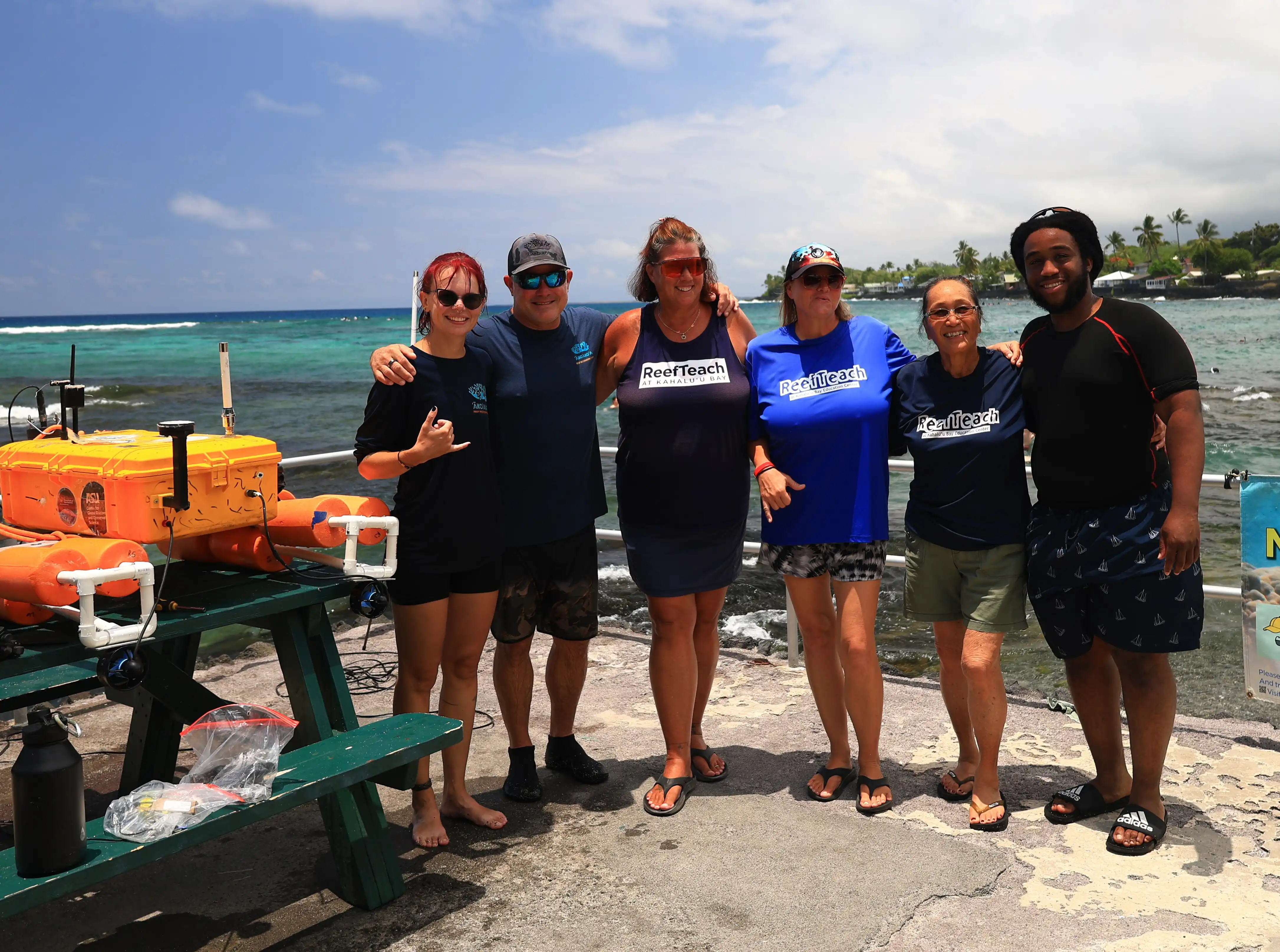

Autonomous Underwater Vehicle Trial in West Hawaiʻi
The ‘Āko‘ako‘a Coral Restoration Nursery and Arizona State University (ASU) recently achieved a major milestone in technology-driven marine conservation by successfully field-testing a new Autonomous Underwater Vehicle (AUV) prototype at Kahalu‘u on the Kona coast. Led by Dr. Robin Smith, an assistant professor at ASU and Chief Scientist of the ‘Āko‘ako‘a Coral Restoration Nursery, the initiative aims to bring high-throughput automation to larval coral restoration to overcome traditional scalability bottlenecks.
.webp)
.webp)
Conducted in collaboration with Dr. JD Das's DREAMS Lab at ASU—and with local field-trial assistance from Reef Teach at Kahalu‘u—the recent tests featured DREAMS Lab researchers Rodney (a PhD student) and Adrian (an undergraduate student) deploying the initial underwater robot prototype to evaluate basic field operations. The prototype vehicle is already equipped with SONAR for underwater location and mapping, along with a specialized sensor called a spectrometer. Looking ahead, once the broader project is fully funded and developed, the final system will autonomously prepare the seafloor, apply marine epoxy, and rapidly secure thousands of coral settlement tiles. To protect the baby corals from predators, the project plans to have the robot place 3D-printed, eco-friendly mesh cages over each tile. These cages are designed to let in water and sunlight before safely dissolving after six to nine months. Crucially, because the deployed larvae are only about the size of a printed period, the robot will use its spectrometer to identify their unique light-based spectral signature on the tiles. This capability will allow the vehicle to safely navigate back using high-definition reef maps and precisely remove competing filamentous algae from around the young larvae, preventing them from being smothered before they reach a resilient, safe size.
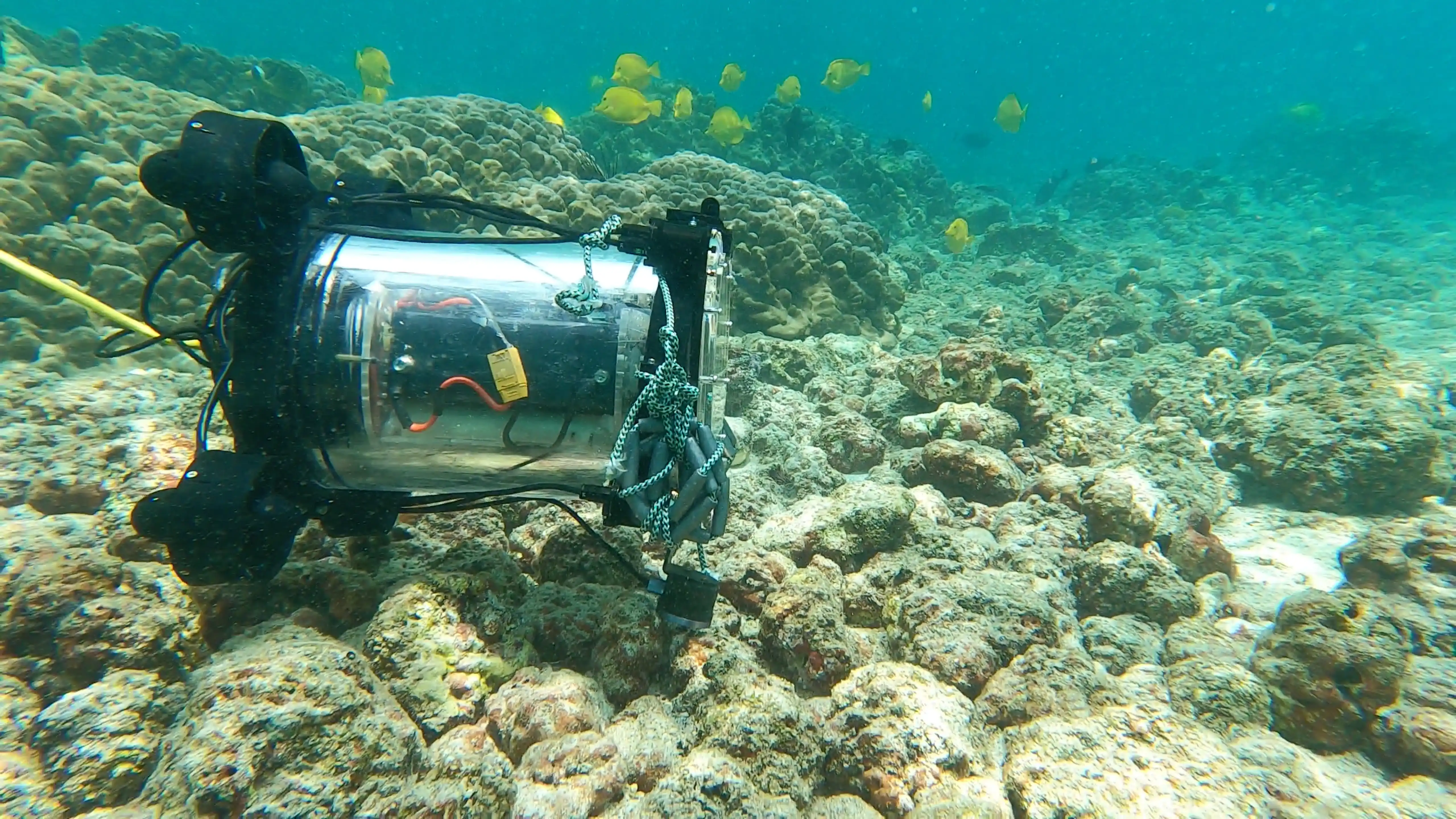
Looking ahead, local community and educational engagement will be a cornerstone of the project's long-term plan. Once the full initiative is funded, high school students from the Kealakehe High School "Tiki Techs" robotics program will be integrated into the engineering lifecycle. This partnership aims to foster hands-on STEM education and train the next generation of environmental leaders in West Hawai‘i as the project develops. By combining cutting-edge marine robotics, advanced biopolymers, and future local community collaboration, this initiative plans to transform coral restoration into a highly efficient, scalable intervention capable of protecting vital reef ecosystems.
.webp)